

Vietnamese banks accelerate their bid to join the list of members of VIFC-HCMC
Posted on 04/05/2026
A wave of commercial banks is accelerating plans to establish legal entities at the Vietnam International Financial Center (VIFC), marking a shift from macro-level policy orientation to practical implementation. This move reflects the repositioning strategies of financial institutions as they pursue long-term goals of unlocking capital flows and deepening integration into the global financial system.
Several major banks, including Vietcombank, SHB, HDBank, TPBank, Nam A Bank, and LPBank, have mentioned plans to establish specialized legal entities, expand their presence, or study suitable operating models at VIFC-HCMC. A common point among these institutions is their ambition to define their role in a new financial space with stronger connectivity and higher standardization.
This trend reflects an adjustment in the banking sector’s development strategy, as the traditional growth model, which relies mainly on credit and the domestic market, is gradually revealing its limitations. VIFC-HCMC is expected to create a more diversified operating environment, covering areas such as cross-border transactions, international payments, foreign exchange, trade finance, green finance, and financial products aligned with international standards.
Nam A Bank is among the banks that have moved early to concretize its direction at VIFC-HCMC. As a strategic investor, the bank is cooperating with IFC, FinGroup Vietnam, and GGGI to implement initiatives related to green finance, ESG, and green bonds. This shows that a trend is gradually emerging in which activities at the center are linked to sustainability standards.
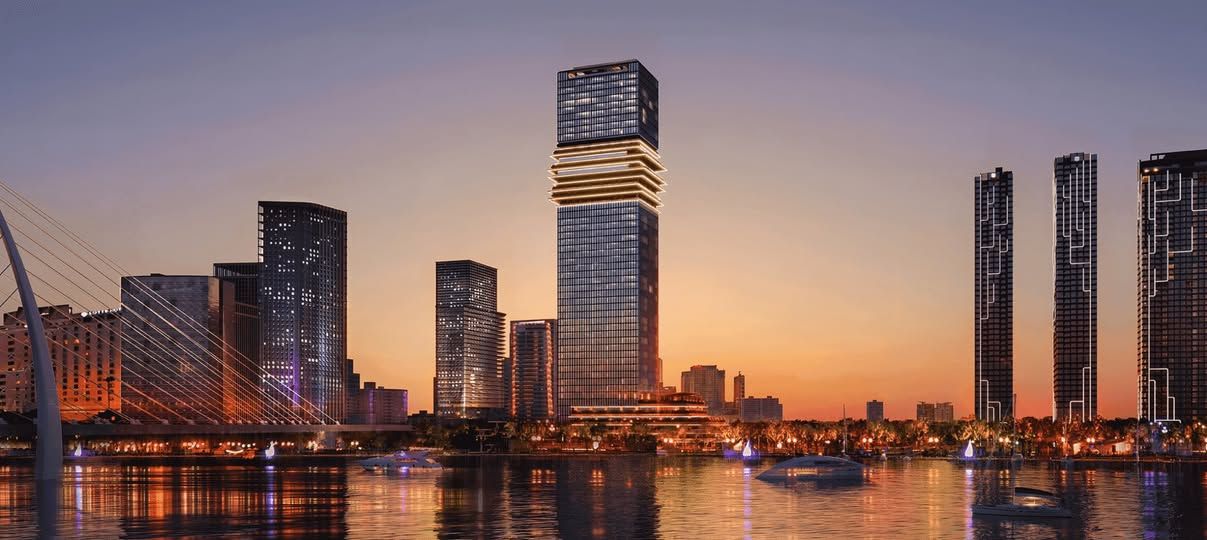
The momentum behind this shift comes from Vietnam’s gradually improving policy and institutional framework. Resolution 222 defines the international financial center as a model involving various types of institutions, including commercial banks, foreign bank branches, securities companies, investment funds, asset management organizations, fintech firms, digital asset entities, and other supporting organizations.
For the banking sector in particular, Decree 329 further specifies regulations related to operating licenses, foreign exchange management, anti-money laundering, and compliance requirements within the international financial center. This is an important signal that gives banks a clearer basis to study suitable models of presence, rather than merely expressing interest.
At present, Ho Chi Minh City has granted certificates of commitment to become members of the financial center to 15 investors. The city is also working with strategic partners to develop projects such as a centralized commodity exchange, maritime and aviation financial centers, venture capital funds, green finance programs, an international switching payment center, a clearing center, and a sandbox model for the digitization of real-world assets.
Overall, VIFC-HCMC has entered its initial implementation phase. For banks, establishing a presence at the financial center is not only part of the process of activating the center, but also a preparatory step toward a new business space where capital flows, technology, risk governance, and international standards will become core competitive capabilities.
Subscribe for updates
We'll send latest updates to your email address.