
IFC-HCM aspires to become a global financial operating system.
Posted on 07/02/2026
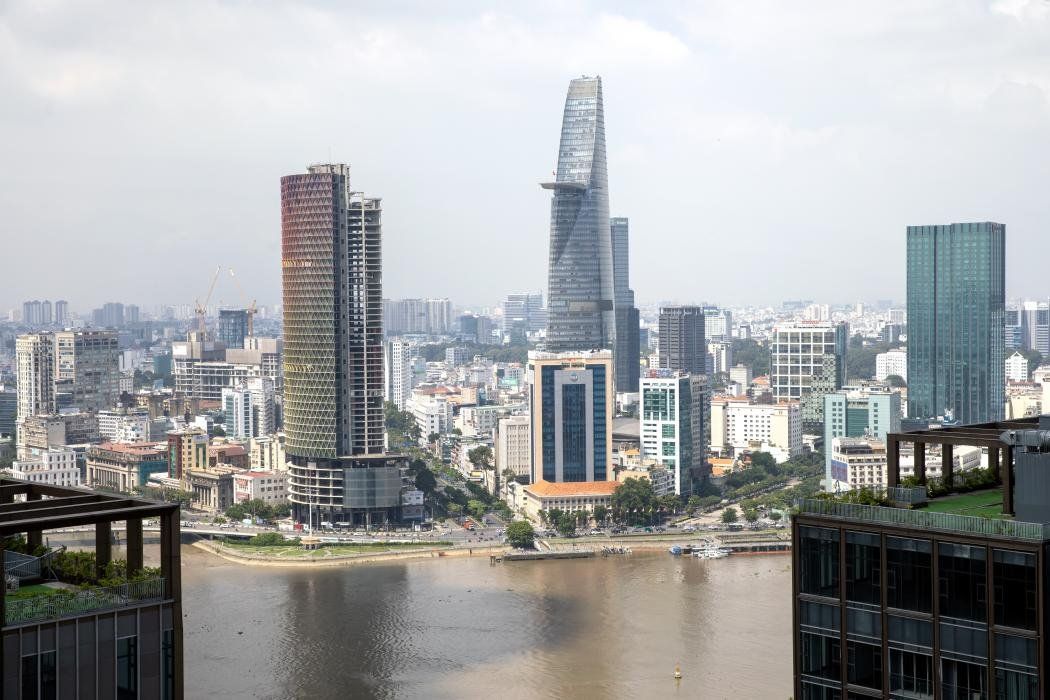
Ho Chi Minh City is shaping a new position on the global financial map. Beyond being a manufacturing and export hub, the city is aiming to become an international financial, technology, and human resources hub, with the International Financial Center in Ho Chi Minh City (IFC-HCM) as its strategic centerpiece.
The Ho Chi Minh City leadership delegation's trip to the United States in October 2025 brought IFC-HCM into international focus. Meetings with Nasdaq, the New York Institute of Finance (NYIF), Intel, NVIDIA, and Warburg Pincus opened up a different development direction: a next-generation, digitized, integrated, and globalized financial center.
Instead of relying on low-cost advantages, Ho Chi Minh City is focusing on developing human capital and technology, following the endogenous growth model proposed by scholars such as Paul Romer. The signing of a Memorandum of Understanding (MOU) between the University of Economics Ho Chi Minh City (UEH) and NYIF creates an international financial workforce pipeline in Vietnam, addressing the barrier to high-quality human resources. Simultaneously, collaborations with Intel and NVIDIA help connect finance with core technologies. Nasdaq also plays a crucial role in transferring technology and operational expertise for advanced financial centers.
AI and Blockchain: Core Infrastructure
Unlike traditional financial centers based on physical trading floors and offices, IFC-HCM operates on a digital platform. AI is applied in asset valuation, fraud detection, and real-time investment advice. Blockchain ensures a decentralized ledger, storing transactions with high reliability. A specialized data center is being established to train AI based on transaction data, serving macroeconomic forecasting and the design of new financial products, differentiating it from the decentralized model prevalent in Singapore.
IFC-HCM aims to integrate all financial activities – from investment, trading, payments, custody to identification – into a single e-wallet. This model is similar to the “App Store” for finance, with each product running on the same operating system – IFC-OS. This integration facilitates risk management, access to historical data, and automated credit/ESG scoring.
The “Singapore +1” strategy
Amid rising operating costs in Singapore, international financial institutions are seeking a second location to expand their operations. Ho Chi Minh City has emerged as a prime example, boasting costs only one-fifth of Singapore's, a rapidly growing financial and technological workforce, and a flexible legal environment with a sandbox, 10-year expert visas, and an open data center. The city employs a "leapfrogging" strategy, shortening the time it takes to establish an international financial ecosystem from decades to just a few years.
IFC-HCM: A global financial operating system.
If successful, IFC-HCM will become a next-generation financial operating system, where companies, investors, banks, and financial startups deploy products and interact on a single platform. At the national level, IFC-HCM will be a driving force for the digital economy and attract global innovation capital. At the global level, the city could become a “next Singapore,” but based on a digital platform and a new operating model.
During the same business trip, representatives of the Ho Chi Minh City government signed cooperation agreements with Nasdaq, NYIF, Intel, NVIDIA, and Warburg Pincus, deploying synchronized legal, technological, and human resource infrastructure.
(Nguyen Huu Huan - Assoc. Prof. Dr., Ho Chi Minh City University of Economics - member of the advisory team for the establishment of IFC-HCM)
Subscribe for updates
We'll send latest updates to your email address.